

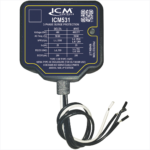
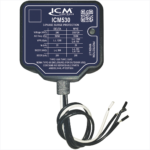
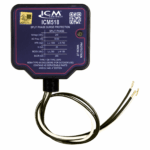


Why Surge Protection Matters More Than Ever
Today’s HVAC systems are more sophisticated than ever. Modern equipment relies on microprocessors, variable frequency drives (VFDs), communicating thermostats, smart controls, sensors, and connected devices to deliver comfort and energy efficiency. While these technologies offer significant benefits, they are also highly vulnerable to electrical surges.
A single transient voltage event can damage sensitive electronics, cause nuisance failures, reduce equipment lifespan, or lead to costly service calls. As a result, surge protection has become an increasingly important consideration for HVAC professionals, contractors, building owners, and equipment manufacturers.
In recent years, the National Electrical Code® (NEC®) has expanded requirements related to Surge Protective Devices (SPDs), making it essential for HVAC stakeholders to understand where surge protection is required and where it is simply a best practice.
What Is a Surge?
An electrical surge, also known as a transient over voltage, is a brief spike in voltage that exceeds normal operating levels. Surges can originate from several sources, including:
- Lightning strikes
- Utility switching operations
- Power restoration following outages
- Large motor startups and shutdowns
- Switching of capacitive or inductive loads
- Internal building electrical disturbances
Although most surges last only microseconds, they can cause immediate or cumulative damage to electronic HVAC components.
NEC Requirements for Surge Protection
The NEC has gradually increased the use of SPDs in commercial, industrial, and residential electrical systems.
NEC Article 230.67 – Dwelling Unit Services
Introduced in the 2020 NEC and expanded in the 2023 edition, Article 230.67 requires surge protection for services supplying dwelling units. The SPD must be installed at or near the service equipment.
For residential HVAC applications, this means that many homes already have a whole-house SPD installed as part of code compliance. However, this does not necessarily eliminate the need for additional protection at HVAC equipment.
NEC Article 242 – Surge Protection
Article 242 consolidates surge protection requirements and installation practices. It provides guidance on SPD types, installation locations, conductor lengths, and system coordination.
HVAC professionals should be aware that proper SPD installation is just as important as selecting the device itself. Long lead lengths and improper grounding can significantly reduce surge protection effectiveness.
Emergency Systems and Critical Facilities
Additional NEC requirements exist for emergency systems, healthcare facilities, fire pumps, and other critical infrastructure. While these provisions may not directly apply to most HVAC installations, HVAC equipment serving these facilities often falls under stricter electrical protection requirements.
Does the NEC Specifically Require SPDs on HVAC Equipment?
In most standard HVAC installations, the NEC does not explicitly require an SPD to be installed directly at every air conditioner, heat pump, furnace, or rooftop unit.
However, several factors make equipment-level surge protection highly advisable:
- Increasing reliance on electronic controls
- Manufacturer recommendations
- Warranty considerations
- Higher replacement costs for control boards and drives
- Increased frequency of power quality disturbances
Many equipment manufacturers now recommend or encourage the use of SPDs to protect sensitive electronics from transient voltage events.
Common HVAC Components Vulnerable to Surges
Modern HVAC systems contain numerous components that can be damaged by transient over voltages, including:
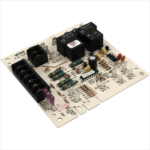
Control Boards
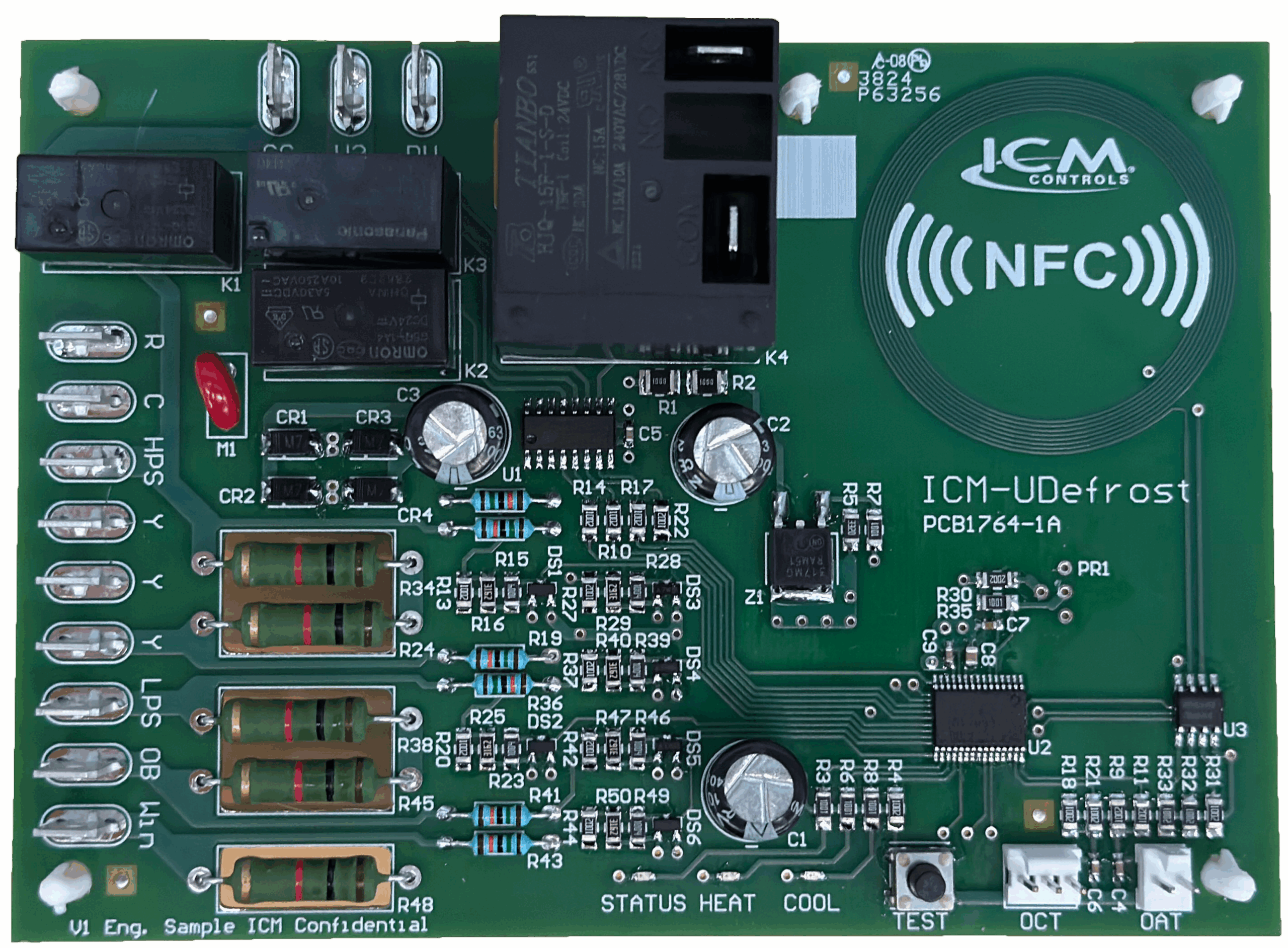
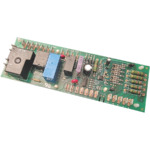
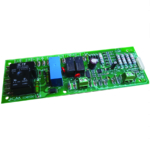
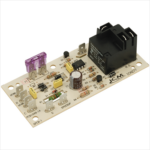
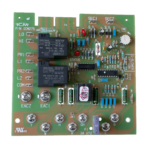
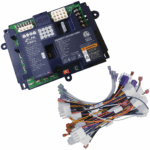
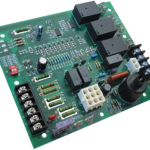
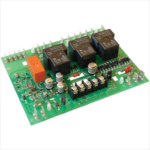
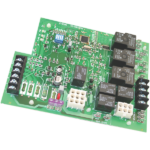
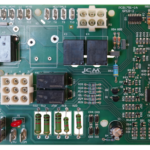
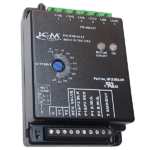
Electronic control boards are among the most commonly replaced components following surge events. Damage may be immediate or develop over time due to cumulative stress.
Variable Frequency Drives (VFDs)
VFDs are increasingly used in commercial HVAC systems to improve efficiency. These sophisticated electronic devices can be especially vulnerable to surge-related failures.
Communicating Systems
Smart thermostats, zoning controls, communicating equipment interfaces, and building automation systems rely on sensitive electronics and communication networks that benefit from surge protection.
Sensors and Low-Voltage Controls
Temperature sensors, pressure transducers, and network-connected control devices can be susceptible to both powerline and signal-line surges.
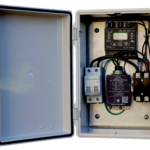
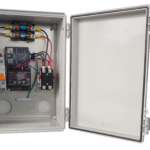
Types of Surge Protective Devices Used in HVAC Applications
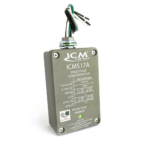
- Type 1 devices are installed on the line side of the service disconnect and provide protection at the service entrance.
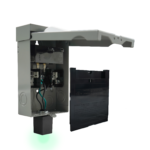
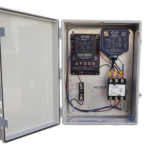
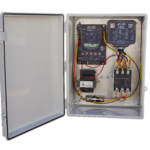
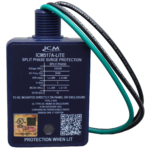
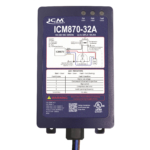
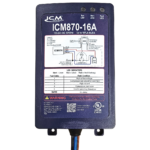
- Type 2 devices are installed on the load side of the service disconnect, typically within distribution panels or equipment panels.
These are commonly used to provide additional protection for HVAC equipment.
- Type 3 devices are point-of-use protectors installed close to sensitive equipment.
In HVAC applications, they may be used to protect specific control systems or electronic devices.
Understanding UL1449 and Why It Matters
Not all surge protection devices are created equal. When specifying surge protection for HVAC equipment, contractors and OEMs should look for devices that are UL 1449 Listed.
UL 1449 is the primary North American safety and performance standard for Surge Protective Devices (SPDs). The standard establishes testing requirements that verify a device can safely limit transient voltage surges while minimizing risks such as fire, electric shock, and equipment damage. It also defines the industry classifications for Type 1, Type 2, and Type 3 SPDs commonly referenced in NEC requirements.
UL 1449 testing evaluates how effectively an SPD limits surge voltage, how it performs during repeated surge events, and how it behaves under fault conditions. Devices that are UL 1449 Listed have undergone standardized testing to demonstrate safe operation throughout their service life.
For HVAC professionals, specifying a UL 1449 Listed SPD helps ensure that surge protection performance is based on recognized industry standards rather than marketing claims alone. One important metric is the Voltage Protection Rating (VPR), which indicates the maximum voltage that can pass through the SPD during a standardized surge test. Lower VPR values generally provide tighter protection for sensitive electronic equipment.
Protecting Modern HVAC Electronics
Today’s HVAC systems contain significantly more electronics than systems installed even a decade ago. Control boards, communicating thermostats, ECM motors, inverter-driven compressors, VFDs, and building automation interfaces all rely on semiconductor-based circuitry that can be vulnerable to transient voltage events.
Even when a surge is not severe enough to cause immediate failure, repeated transient events can degrade electronic components over time. The result may be intermittent faults, communication errors, shortened component life, or premature control board failures.
This is particularly important for:
- Variable-speed heat pumps and air conditioners
- Inverter-driven compressors
- Communicating residential HVAC systems
- Commercial rooftop units with VFDs
- Building automation systems (BAS)
- Smart thermostats and connected controls
- IAQ equipment with integrated electronics
A layered surge protection strategy using UL 1449 Listed Type 1 and Type 2 SPDs can help reduce the surge energy that reaches these sensitive components. Type 1 devices provide the first line of defense at the service entrance, while Type 2 devices offer additional protection closer to HVAC equipment and control panels.
Best Practices for HVAC Surge Protection
While NEC compliance establishes a minimum safety standard, best practices often go beyond code requirements.
Use a Layered Protection Strategy
The most effective approach typically involves multiple layers of protection:
- Service entrance SPD
- Distribution panel SPD
- Equipment-level SPD for critical HVAC equipment
This coordinated approach helps reduce the magnitude of surges throughout the electrical system.
Protect Both Power and Communication Circuits
Many HVAC failures occur through low-voltage communication wiring rather than the primary power supply.
Consider surge protection for:
- Thermostat wiring
- BACnet networks
- Modbus communications
- Sensor circuits
- Ethernet-connected controls
Follow Manyfacturer Instructuions
Always follow SPD and HVAC equipment manufacturer installation requirements. Proper grounding and conductor routing are critical to achieving rated protection performance.
Minimize Lead Lengths
The NEC and SPD manufacturers emphasize keeping connection conductors as short and straight as possible. Excess conductor length increases impedance and can reduce surge suppression effectiveness.
The Cost of Not Protecting HVAC Equipment
The cost of replacing a damaged control board, VFD, or communicating thermostat can easily exceed the cost of installing surge protection. Beyond component replacement, surge-related failures can lead to:
- Emergency service calls
- Occupant discomfort
- Business downtime
- Warranty disputes
- Reduced equipment life
As HVAC systems continue to incorporate more electronics and connectivity, the value of surge protection continues to grow.
Final Thoughts
The NEC increasingly recognizes the importance of surge protection throughout electrical systems. While code requirements may not mandate a dedicated SPD on every HVAC unit, the growing use of electronic controls makes surge protection a practical and cost-effective investment.
For contractors, specifying surge protection can help reduce callbacks and protect customer equipment. For building owners, it provides an additional layer of defense against unexpected electrical disturbances. And for manufacturers and control system providers, it helps ensure that sophisticated HVAC technologies deliver reliable performance for years to come.
Understanding NEC requirements and implementing a comprehensive surge protection strategy can help safeguard HVAC equipment, reduce downtime, and improve long-term system reliability.
References:
- NFPA 70®, National Electrical Code®, 2023 Edition.
- NFPA, Article 230.67 – Surge Protection.
- NFPA, Article 242 – Overvoltage Protection.
- Leviton, “2020 and 2023 NEC Updates: 230.67 Surge Protection.”
- Mike Holt Enterprises, “Article 242 Overvoltage Protection.”
- EC&M Magazine, “NEC Requirements for Overvoltage Protection.”
- DITEK, “Understanding the 2023 NEC Rules for Surge Protection.”
- Hubbell Wiring Device-Kellems, “How to Meet 2023 NEC Surge Protection Requirements.”
- UL Standards & Engagement. UL 1449: Surge Protective Devices.
- NEMA Surge Protection Institute. UL 1449: Surge Protective Devices (SPD).
- UL Solutions. Surge Protection Device Testing and Certification Services.
- Eaton. Summary of UL and IEEE Standards for Surge Protection Devices.
- Schneider Electric. Type 1 and Type 2 Surge Protective Devices.